

Ascorbic acid E300: what it is and how to use it in cooking
Ascorbic acid is a useful ingredient for protecting the colour of fruit and vegetables during preparation. Also known as vitamin C, it is identified by the code E300 when used as a food additive.
In cooking, it is mainly used as an antioxidant: it helps counter oxidation processes that can affect the appearance of ingredients. To use it correctly, it is important to distinguish its function from that of other food acids and choose a dosage suited to the preparation.
What is ascorbic acid?
Ascorbic acid occurs naturally in various foods, including fruit and vegetables. For culinary use, it is also available as a food-grade powder, a convenient form to weigh and dissolve in liquids.
Its name may suggest that its main purpose is to acidify a preparation. Its technical value, however, lies primarily in its antioxidant action: it is used to protect ingredients against the effects of oxidation.
What is ascorbic acid used for in cooking?
One of its most common applications is treating cut fruit. Apples and pears, for example, can darken after cutting: damage to the tissues and contact with oxygen encourage enzymatic browning.
Ascorbic acid can help slow this process, making it easier to maintain an appealing presentation during preparation.
It can be used in preparations such as:
- Sliced fruit for plating, desserts and garnishes.
- Fruit salads and fruit components prepared for service.
- Purées, juices and extracts where oxidation needs to be limited.
- Some preparations of vegetables prone to browning, checking the result in each specific preparation.
Its effectiveness depends on the food, dosage, temperature and exposure time to air. Careful preparation and correct storage of ingredients remain essential.
How to use ascorbic acid on fruit
For sliced fruit, you can prepare an antioxidant bath by dissolving food-grade ascorbic acid in water and immersing the fruit immediately after cutting.
Weigh the powder using a precision scale, dissolve it completely in the water and treat the freshly cut fruit. After soaking, drain and gently pat the surfaces dry before continuing with the preparation.
For purées, juices and extracts, ascorbic acid can be incorporated directly when the formulation calls for it. In this case, it is particularly important to assess both its effect on colour and the resulting taste.
How much ascorbic acid should you use?
There is no single dosage suitable for every food. A sliced apple, a purée and an extract have different characteristics and require specific trials.
The dosage must take account of the quantity of food or liquid, the desired result and the manufacturer’s instructions. A precision scale helps you work consistently and adjust the formulation after an initial trial.
Ascorbic acid vs citric acid: what is the difference?
Ascorbic acid and citric acid are different ingredients, although both can be used in fruit preparations.
Ascorbic acid E300 is mainly chosen for its antioxidant action. Citric acid E330 is primarily used to acidify and regulate acidity; it can help limit browning by changing the conditions within the preparation.
They are therefore not automatically interchangeable at the same dosage. The choice depends on the required function and the flavour profile you want to achieve.
Can it replace lemon juice?
In some preparations, ascorbic acid is useful for limiting browning without adding the distinctive aroma of lemon.
Lemon juice also contributes water, acidity and flavour. If these elements are part of the recipe’s balance, replacing it requires the formulation to be reviewed.
Ascorbic acid allows precise dosing of the antioxidant ingredient, but an excessive addition can still affect the taste.
Is ascorbic acid a preservative?
Antioxidant action should not be confused with guaranteed preservation. Maintaining a food’s colour does not make it microbiologically safe or automatically extend its shelf life.
Ascorbic acid does not replace refrigeration, hygiene, correct management of service times or validated preservation processes.
Which ascorbic acid should you choose for food use?
For culinary preparations, choose a product explicitly intended for food use, with clear instructions and packaging suited to your needs.
Special Ingredients Ascorbic Acid E300 is available as a powder for food preparations. Store it according to the instructions on the packaging and close the container carefully after use.
With precise weighing and a trial in your specific preparation, ascorbic acid becomes a practical ally for managing oxidation and maintaining the appearance of ingredients.
Ingredients used in this recipe
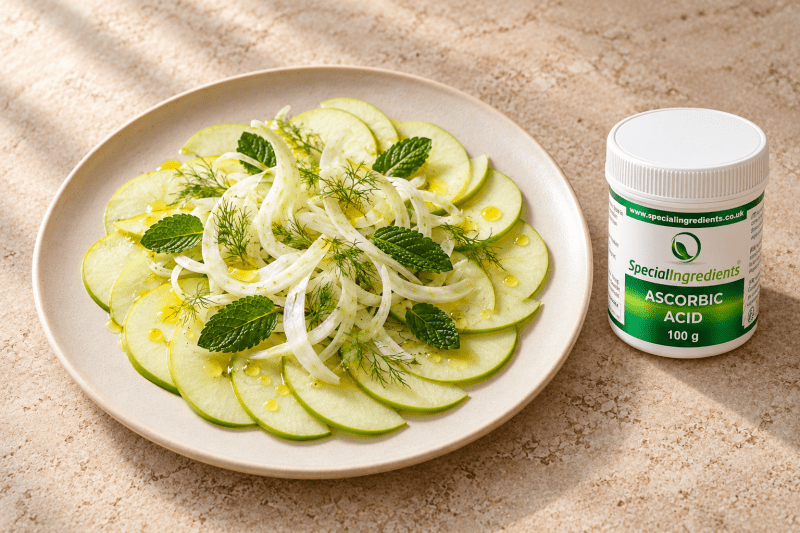
Green apple, fennel and mint carpaccio with ascorbic acid
Be the first to rateRate this recipe
A crisp, delicate plant-based starter. Ascorbic acid E300 is dissolved in the apple dipping bath to help reduce browning on cut surfaces without using lemon juice.
Ingredients
- 400 g Granny Smith apples, cored weight, skin on
- 200 g trimmed fennel, plus a few fennel fronds
- 8 small fresh mint leaves
- 20 g extra virgin olive oil
- 2 g fine salt
- 500 ml cold water for the antioxidant bath
- 1 g ascorbic acid E300 Special Ingredients
Products used in this recipe

Method
- Fully dissolve the ascorbic acid in cold water in a clean bowl. Use a precision scale.
- Wash and core the apples, then slice 1–2 mm thick. Immediately immerse each batch in the bath for 3 minutes. Work in batches if necessary.
- Drain the apples and gently pat dry. Discard the used bath.
- Thinly shave the fennel. Arrange the apple slices on plates and place the fennel in the centre.
- Dress with olive oil and salt, finish with mint and fennel fronds, and serve immediately.