

Edible glass: what it is and why it is transforming modern cooking
In contemporary cooking and creative patisserie, visual impact has become as important as flavour. Edible glass is one of the most fascinating recent techniques: thin, transparent, glossy, crisp sheets that resemble glass but are entirely edible.
They add structure, height and contrast, turning a dessert or savoury preparation into a memorable gastronomic experience.
What is edible glass?
Edible glass consists of extremely thin, transparent preparations, often made from fruit juices, infusions or flavoured liquids. Once set, they become rigid, brittle and crisp, with an elegant appearance.
Typical uses include:
- Decorating ice creams and sorbets.
- Completing plated desserts.
- Adding crisp textures.
- Creating a wow effect in modern patisserie.
- Surprising customers with an unexpected element.
Although they resemble real glass, they melt or break gently when bitten without being hard or unpleasant.
Why use specific ingredients?
Ordinary sugar alone cannot produce thin, transparent, stable sheets. Technical ingredients must:
- Stabilise the liquid.
- Control viscosity.
- Ensure transparency.
- Create a crisp, uniform structure.
- Avoid cloudiness or irregular crystallisation.
Professional products such as Ultratex and Crisp Film, widely used in modern cooking and molecular gastronomy, make this possible.
Ultratex and Crisp Film: complete texture control
Ultratex is a powerful cold thickener that gives liquids body and structure without changing colour or flavour. It creates smooth, even bases for spreading into extremely thin layers.
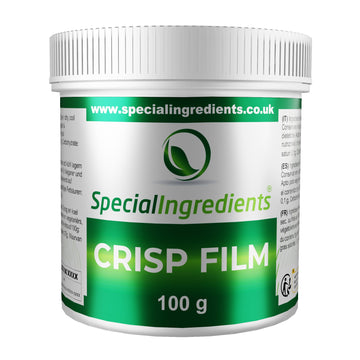
Crisp Film creates rigid, crisp, transparent films, essential for the glass effect. It transforms a structured liquid into a brittle, glossy sheet when dried or cooled.
Together, they produce edible glass that is:
- Thin.
- Irregularly fragmented.
- Exceptionally elegant.
- Easy to position on a plate.
Creative applications in cooking and patisserie
Edible glass suits many preparations:
- On ice cream quenelles for hot/cold contrast.
- On mousses and semifreddos.
- As a vertical element in plated desserts.
- In modern patisserie and fine dining.
- As decoration for events and cooking demonstrations.
Its visual lightness enhances the dish without weighing it down and often makes it the first detail to catch a customer’s attention.
A growing trend
Modern cooking increasingly values clean, precise and repeatable techniques. Edible glass fits perfectly: striking, versatile and creative without overwhelming a preparation’s flavour.
With the right ingredients and a little experimentation, it becomes a powerful tool for chefs, pastry chefs and food creators.
Want to learn more?
At specialingredients.it, find professional ingredients such as Ultratex and Crisp Film, plus guides, videos and ideas to advance your creative cooking.
Ingredients used in this recipe
Edible glass: what it is and why it is transforming modern cooking
Be the first to rateRate this recipe
In contemporary cooking and creative patisserie, visual impact has become as important as flavour. Edible glass is one of the most fascinating recent techniques: thin, transparent, glossy, crisp sheets that resemble glass but are entirely edible. They add structure, height and contrast, turning a dessert or savoury preparation into a memorable gastronomic experience.What is edible glass?Edible glass consists of extremely thin, transparent preparations, often made from fruit juices, infusions or flavoured liquids. Once set, they become rigid, brittle and crisp, with an elegant appearance. Typical uses include:Decorating ice creams and sorbets.Completing plated desserts.Adding crisp textures.Creating a wow effect in modern patisserie.Surprising customers with an unexpected element.Although they resemble real glass, they melt or break gently when bitten without being hard or unpleasant.Why use specific ingredients?Ordinary sugar alone cannot produce thin, transparent, stable sheets. Technical ingredients must:Stabilise the liquid.Control viscosity.Ensure transparency.Create a crisp, uniform structure.Avoid cloudiness or irregular crystallisation.Professional products such as Ultratex and Crisp Film, widely used in modern cooking and molecular gastronomy, make this possible.Ultratex and Crisp Film: complete texture controlUltratex is a powerful cold thickener that gives liquids body and structure without changing colour or flavour. It creates smooth, even bases for spreading into extremely thin layers. Crisp Film creates rigid, crisp, transparent films, essential for the glass effect. It transforms a structured liquid into a brittle, glossy sheet when dried or cooled. Together, they produce edible glass that is:Thin.Irregularly fragmented.Exceptionally elegant.Easy to position on a plate.Creative applications in cooking and patisserieEdible glass suits many preparations:On ice cream quenelles for hot/cold contrast.On mousses and semifreddos.As a vertical element in plated desserts.In modern patisserie and fine dining.As decoration for events and cooking demonstrations.Its visual lightness enhances the dish without weighing it down and often makes it the first detail to catch a customer’s attention.A growing trendModern cooking increasingly values clean, precise and repeatable techniques. Edible glass fits perfectly: striking, versatile and creative without overwhelming a preparation’s flavour. With the right ingredients and a little experimentation, it becomes a powerful tool for chefs, pastry chefs and food creators.Want to learn more?At specialingredients.it, find professional ingredients such as Ultratex and Crisp Film, plus guides, videos and ideas to advance your creative cooking.

Ingredients
- Ultratex
- Crisp Film
- Fruit purée
Products used in this recipe

Method
- Watching the video is recommended.
- Mix the fruit purée with Ultratex and Crisp Film.
- Place in a dehydrator.
- Use as needed.