
6 sizesfrom €11,95
Sodium alginate
- Spherification: caviar, pearls, spheres and spaghetti
- Gels in cold liquids on contact with calcium
- Natural thickener and stabiliser extracted from brown seaweed
How to use
0.5–1% of the liquid weight (5–10 g per litre). Blend to dissolve, leave to rest to remove bubbles, then drop into a calcium lactate bath.


Sodium alginate
Choose your size
The bigger the size, the less you pay per kilo.


More with Sodium alginate


Recipes with Sodium alginate



Guide
Sodium alginate: guide and tips
In this guide
- What is sodium alginate?
- How to use sodium alginate
- How much sodium alginate to use
- Where to buy sodium alginate
- Spherification
- Frequently asked questions
- What is sodium alginate?
- Can you find sodium alginate in a supermarket?
- Is sodium alginate vegan?
New on the blog: our step-by-step complete guide to spherification.
What is sodium alginate?
Sodium alginate is a natural polysaccharide extracted from brown seaweed, particularly species such as Macrocystis pyrifera, Ascophyllum nodosum and Laminaria digitata. It is widely used in the food industry as a thickener, stabiliser and emulsifier because of its unique ability to form a gel on contact with calcium ions. This property makes it ideal for creating spheres, foams and other innovative culinary textures. Its natural origin and versatile applications also make it a favourite among chefs experimenting with molecular gastronomy and modernist cooking.
How to use sodium alginate
For best results, accurately measure the sodium alginate and calcium solution. Dissolve Sodium Alginate in water or your chosen liquid using a blender or hand blender to ensure a smooth, lump-free mixture. Leave it to rest for a few hours or overnight to eliminate air bubbles. Combine the sodium alginate solution with a calcium-rich liquid, such as a calcium lactate or calcium chloride solution, to create pearls. Once your gels have formed, rinse them gently in water to remove excess calcium. Keep them in a water bath until ready to use in your dish. Sodium alginate is a versatile ingredient that can carry different flavours. Experiment with liquids such as fruit juices, stocks or sauces to create unique flavour experiences. This ingredient opens up endless possibilities for innovative food presentation and is essential for anyone interested in the science of cooking.
How much sodium alginate to use
For spherification, use 0.5–1% alginate relative to the liquid's weight, or 5–10 g per litre. Dissolve it by blending and use low-calcium water where possible: with calcium-rich liquids such as milk, alginate begins gelling too early. Reverse spherification is preferable in that case.
Where to buy sodium alginate
You can buy sodium alginate from our website. We offer it in various quantities:
- Sodium alginate 100g
- Sodium alginate 250g
- Sodium alginate 500g
- Sodium alginate 5kg
- Sodium alginate 10kg
- Sodium alginate 25kg
To get started with spherification, try the Calcium Lactate 100 g + Sodium Alginate 100 g kit: everything you need in one pack.
Remember, sodium alginate is a versatile ingredient that can transform your culinary creations. Whether you are a professional chef or a home cook, it lets you explore new techniques and create dishes that are delicious and visually stunning. Happy cooking! Visit our website today to enrich your cooking with this essential molecular gastronomy ingredient.
Spherification
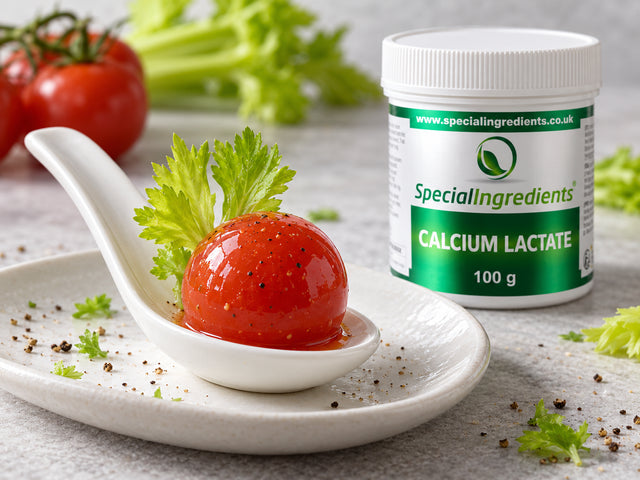
Spherification and reverse spherification are culinary techniques that use calcium lactate and sodium alginate to create gel-like spheres. In spherification, a sodium alginate solution is dropped into a calcium lactate bath, forming a gel membrane around the liquid. Reverse spherification involves dropping a calcium lactate mixture into a sodium alginate bath, producing more stable spheres. These techniques are popular in modern gastronomy for creating visually striking dishes with unique textures.
Frequently asked questions
What is sodium alginate?
A gelling agent extracted from brown seaweed that forms a gel on contact with calcium: the basis of spherification.
Can you find sodium alginate in a supermarket?
Usually not: it is available in specialist shops and online. Here it comes in sizes from 100 g to 25 kg.
Is sodium alginate vegan?
Yes: it is plant-derived, suitable for vegans and gluten free.